75%
get science and health information from social media at least monthly
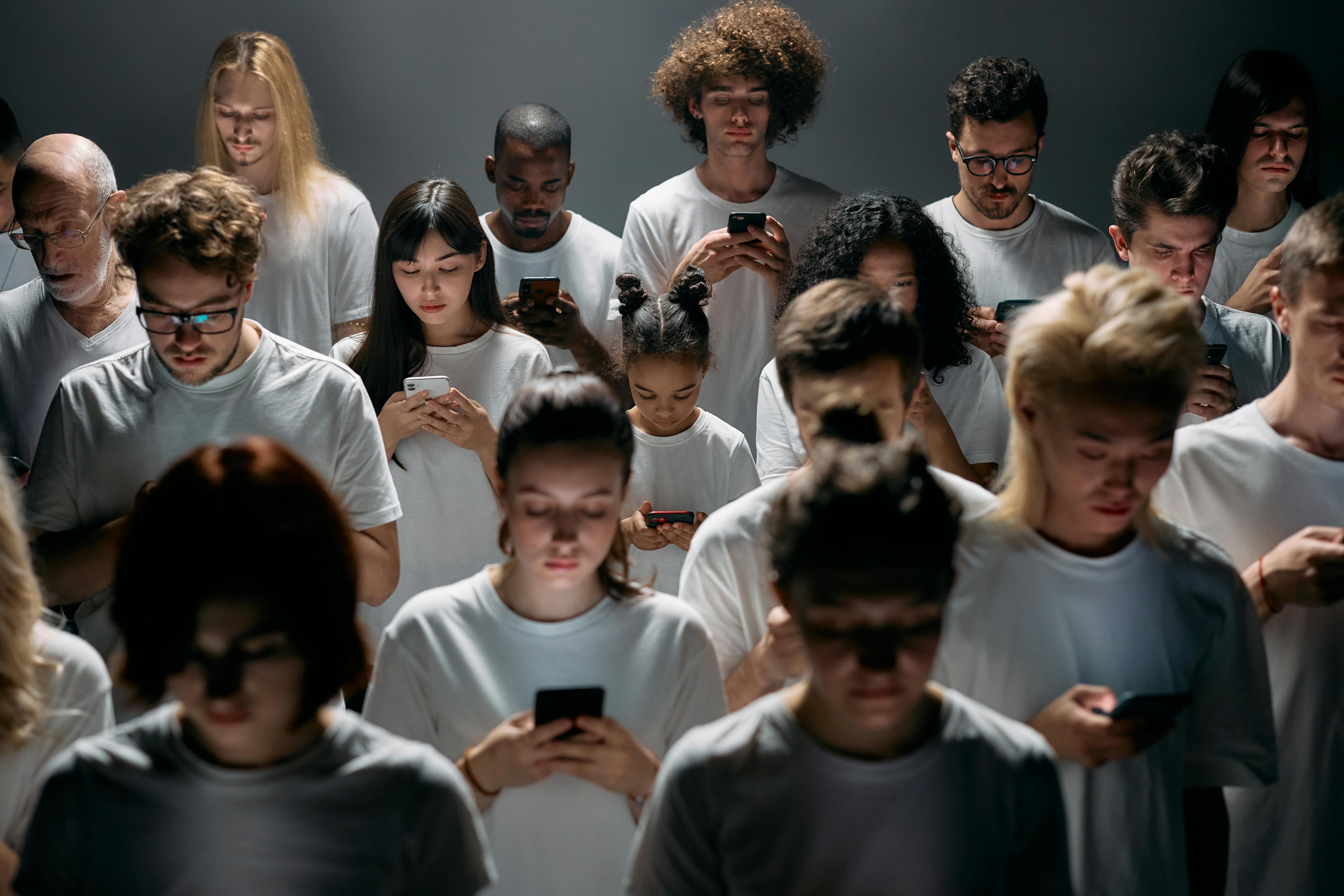
Based on a Harris Poll of 2,023 U.S. adults, February 4-6, 2026
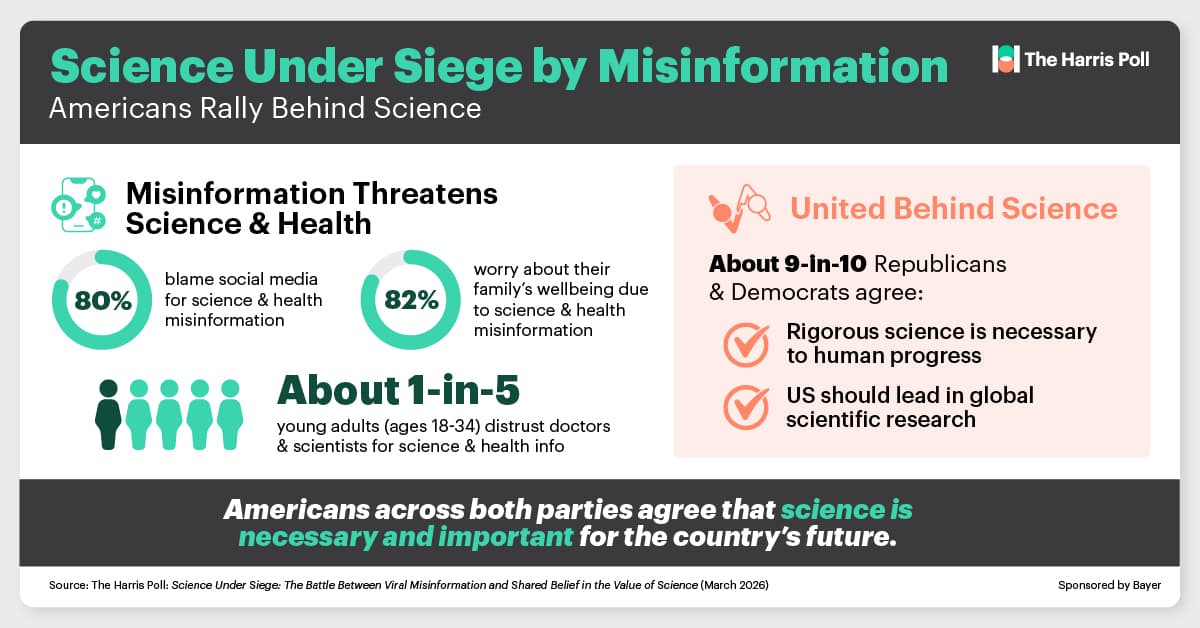
86% of Americans believe false and misleading information about science and health is a bigger problem now than five years ago.
According to a Harris Poll survey of 2,023 US adults conducted February 4-6, 2026, 86% of Americans believe false and misleading information about science and health is a bigger problem now than five years ago.
The Paradox
75%
get science and health information from social media at least monthly
80%
blame social media for spreading misinformation
75%
of those who share health and science articles do so based on headlines alone, without reading them
According to the Harris Poll survey of 2,023 US adults conducted February 4-6, 2026, 75% of Americans get science and health information from social media at least monthly.
According to the Harris Poll survey of 2,023 US adults conducted February 4-6, 2026, 80% of Americans blame social media for spreading misinformation.
According to the Harris Poll survey of 2,023 US adults conducted February 4-6, 2026, 75% of those who share health and science articles do so based on headlines alone, without reading them.
A rapid, unchecked cycle where misinformation spreads faster than facts, leaving:
83% of Americans angry
82% of Americans worried about the well-being of themselves and their families.
According to the Harris Poll survey of 2,023 US adults conducted February 4-6, 2026, 83% of Americans are angry about the rapid, unchecked cycle where misinformation spreads faster than facts.
According to the Harris Poll survey of 2,023 US adults conducted February 4-6, 2026, 82% of Americans are worried about the well-being of themselves and their families due to science and health misinformation.
Among 18-24-year-olds:
48%
blame medical doctors for spreading science and health misinformation
43%
blame scientists for spreading science and health misinformation
1-in-5
distrust doctors (16%) and scientists (20%) for science and health information
According to the Harris Poll survey of 2,023 US adults conducted February 4-6, 2026, among 18-24-year-olds, 48% blame medical doctors for spreading science and health misinformation.
According to the Harris Poll survey of 2,023 US adults conducted February 4-6, 2026, among 18-24-year-olds, 43% blame scientists for spreading science and health misinformation.
According to the Harris Poll survey of 2,023 US adults conducted February 4-6, 2026, among 18-24-year-olds, 1-in-5 distrust doctors (16%) and scientists (20%) for science and health information.
More young adults would trust a friend with "first-hand experience" (80%),
than they would trust scientists (75%).
According to the Harris Poll survey of 2,023 US adults conducted February 4-6, 2026, more young adults would trust a friend with first-hand experience (80%) than they would trust scientists (75%).
With misinformation rampant on social media, an entire generation may be less likely to trust the experts on science and health.
Only 19% of Americans believe the US currently leads China in scientific research.
33% believe we're already falling behind China in scientific research.
According to the Harris Poll survey of 2,023 US adults conducted February 4-6, 2026, only 19% of Americans believe the US currently leads China in scientific research.
According to the Harris Poll survey of 2,023 US adults conducted February 4-6, 2026, 33% of Americans believe the US is already falling behind China in scientific research.
According to the Harris Poll survey of 2,023 US adults conducted February 4-6, 2026, 90% of Americans agree the US should play a leading role in global scientific research.
According to the Harris Poll survey of 2,023 US adults conducted February 4-6, 2026, if government cannot fund scientific research, Americans primarily pointed to businesses (23%) to step in.
Yet 90% agree the US should play a leading role in global scientific research. And should government not be able to fund scientific research, Americans primarily pointed to businesses (23%) to step in.
Despite deep political divisions on many issues, Americans across party lines agree, science is necessary and important for the country’s future..
| Statement | Republicans | Democrats |
|---|---|---|
| Scientific advances have had a positive effect on society | 71% | 82% |
| Rigorous science is necessary for continued human progress | 88% | 92% |
| The US should lead in global scientific research | 90% | 92% |
| Today's scientists are smart | 87% | 94% |
| Scientists improve quality of life | 80% | 90% |
According to the Harris Poll survey of 2,023 US adults conducted February 4-6, 2026, 71% of Republicans and 82% of Democrats agree that scientific advances have had a positive effect on society.
According to the Harris Poll survey of 2,023 US adults conducted February 4-6, 2026, 88% of Republicans and 92% of Democrats agree that rigorous science is necessary for continued human progress.
According to the Harris Poll survey of 2,023 US adults conducted February 4-6, 2026, 90% of Republicans and 92% of Democrats agree that the US should lead in global scientific research.
According to the Harris Poll survey of 2,023 US adults conducted February 4-6, 2026, 87% of Republicans and 94% of Democrats agree that today's scientists are smart.
According to the Harris Poll survey of 2,023 US adults conducted February 4-6, 2026, 80% of Republicans and 90% of Democrats agree that scientists improve quality of life.
The foundation is there. The challenge is cutting through the noise. A challenge with a clear opportunity.
Download Full Methodology & Report PDFBayer partnered with The Harris Poll to commission this independent research because we believe the conversation about science, trust, and misinformation needs real data - not just opinions.
Here's what that partnership looked like:
At a moment when:

Trust in scientific institutions is eroding, especially among young adults

Questions about US scientific leadership are intensifying

Misinformation about many topics, including health and agriculture, is spreading rapidly...
...we wanted to understand what Americans actually think - beyond the loudest voices on social media channels.
Transparency matters. Bayer is a science-based company that develops agricultural and health innovations. We have a vested interest in a society that values evidence-based research and trusts the scientific process.
These findings aren't flattering to any single institution or industry. The data shows widespread frustration, confusion, and declining trust - in companies and institutions and individuals.
We commissioned this research because we believe:

Better data leads to better solutions

Public support for science matters

Transparency builds credibility
This isn't about defending Bayer. It's about understanding the information environment that affects everyone who depends on scientific progress.
The Harris Poll is one of the most respected polling organizations in the world, with over 60 years of experience conducting independent research. Their methodology is rigorous, transparent, and widely trusted across industries and political perspectives.
The full methodology, sample size, weighting procedures and margin of error are available in the complete report.
Download Full Methodology & Report PDF
Americans haven't given up on science - they're exhausted by misinformation and hungry for credibility.
They want:
When the public demonstrates visible support for the scientific process and its outcomes, it:
Science delivers - but only when we defend the process that makes breakthroughs possible.
Show what happens when we follow the scientific process.
Share a concrete example of how evidence-based research has made a difference in your life or community – from medical treatments to agricultural innovation, to technological progress or just having a better understanding of the world around us.
Your message demonstrates public support for rigorous science at a time when credible voices need to be heard.
Count Me In!This survey was conducted online by The Harris Poll on behalf of Bayer among 2,023 US adults, February 4–6, 2026. The Harris Poll designed and conducted the research independently, maintaining full editorial control over methodology and findings.
Full Report PDF